
Saturday, October 07, 2006

Friday, October 06, 2006
Position Available--Guantánamo Bay, Cuba
Job Title: Chief Librarian
Organization: Torres Advanced Enterprise Solutions
Location: Guantanamo Bay, Cuba,
Description: Are you interested in putting your library science education and experience to work in one of today’s most challenging, interesting and rewarding environments? Torres Advanced Enterprise Solutions is recruiting for a Chief Librarian to manage the Detainee Library, under the direction of the Joint Task Force-Guantanamo Bay, Cuba.
In managing the Detainee Library, the Chief Librarian is responsible for providing, maintaining and developing library services and operations using reading, recreational games and puzzles, music, or electronic media. The Chief Librarian is responsible for selecting and maintaining a range of reading and recreational materials to reflect the needs of the patrons in terms of languages and appropriate/approved topics.
The Chief Librarian will supervise a staff of three (one Assistant Librarian and two Linguist/Library Assistants). The Chief Librarian will also work closely with other contractor and government staff.
To be successful in this job, the Chief Librarian will need to be creative, adaptable, ambitious and resourceful. The ideal candidate will possess a degree in library studies or a closely related field and relevant experience. We will consider extensive experience in library operations and management, in lieu of a degree. This job requires proficiency in English. Applicants must be eligible for a US government secret clearance. If you’re interested in talking in more detail, please e-mail your resume to hr@torresco.com.
Application Information:Torres Advanced Enterprise Solutions offers a highly competitive salary and benefit package. Additionally, this job qualifies you for federal tax breaks. Torres Advanced Enterprise Solutions is a certified Minority Owned Business and a Service Disabled Veteran Owned Business. Torres Advanced Enterprise Solutions is an equal opportunity employer
**********************************************************************************************************************************************
Organization: Torres Advanced Enterprise Solutions
Location: Guantanamo Bay, Cuba,
Description: Are you interested in putting your library science education and experience to work in one of today’s most challenging, interesting and rewarding environments? Torres Advanced Enterprise Solutions is recruiting for a Chief Librarian to manage the Detainee Library, under the direction of the Joint Task Force-Guantanamo Bay, Cuba.
In managing the Detainee Library, the Chief Librarian is responsible for providing, maintaining and developing library services and operations using reading, recreational games and puzzles, music, or electronic media. The Chief Librarian is responsible for selecting and maintaining a range of reading and recreational materials to reflect the needs of the patrons in terms of languages and appropriate/approved topics.
The Chief Librarian will supervise a staff of three (one Assistant Librarian and two Linguist/Library Assistants). The Chief Librarian will also work closely with other contractor and government staff.
To be successful in this job, the Chief Librarian will need to be creative, adaptable, ambitious and resourceful. The ideal candidate will possess a degree in library studies or a closely related field and relevant experience. We will consider extensive experience in library operations and management, in lieu of a degree. This job requires proficiency in English. Applicants must be eligible for a US government secret clearance. If you’re interested in talking in more detail, please e-mail your resume to hr@torresco.com.
Application Information:Torres Advanced Enterprise Solutions offers a highly competitive salary and benefit package. Additionally, this job qualifies you for federal tax breaks. Torres Advanced Enterprise Solutions is a certified Minority Owned Business and a Service Disabled Veteran Owned Business. Torres Advanced Enterprise Solutions is an equal opportunity employer
**********************************************************************************************************************************************
Thursday, October 05, 2006
Sunday, October 01, 2006

Saturday, September 30, 2006
Xiao Rong vocalist/guitarist of Brain Failure

Xiao Rong
vocalist/guitarist of Brain Failure
by Tim Krysko (03.01.06)
You guys spend a lot of time in the US these days. Do you think you will ever move there?
I don't think I really want to do that. It's not my plan to live in America. If there's a lot of shows I can play, I will be satisfied.
Do you get sick of that plane ride and crossing the Pacific ocean all the time?
Well, we all grew up in China, born between 1975 and 1979. When we were kids our parents could only give us a pretty boring holiday, so we are always happy to get on a plane to go somewhere and play our music. Now we're used to it, and we know that every time we get on a plane we're going to do a fucking great tour, and that tour will make us happy and make our band bigger every day. So whatever bad things, like our van getting broken down in the middle of the freeway in America, it doesn't matter because we're having too much fun with our music.
You played some warped tour shows last year, right? How did you find those after doing a bunch of other tours?
At warped tour we just played a small stage, the Hot Topic stage. It wasn't as well organized as the big stage, but it's interesting because it's not a real tour: people aren't coming especially for you. They're coming to see many bands, and the bigger bands get to play on the main stage. So we just play as good as we can and hand out lots of flyers to the people watching our set. For the regular tour, we always hook up with another bigger band. They have the banner and everyone is coming to see their show, and at the same time all these people are open-minded to see us and another opening band.
When you go back to Beijing do you play a lot of shows there and tour around China?
In October after we toured with the Street Dogs we went back to China and did a whole China tour. We did the China tour a couple times and last time was very good. It was probably twelve shows - there was three cities where there was some problem with the club, but we had fun anyway - and the other twelve shows were all sold out, around 200-300 people.
You still haven't had any luck helping your friends in US bands make it to China?
It's hard to hook up a big band in China. It's easier to bring a band that's not famous. The smaller bands are easier because we just tour with our guitars. We never bring other instruments; we play in a club and use whatever instruments that club has. It's hard to tell a bigger band to come to tour and just bring a guitar. No drums, no speakers...
Do you tour by van?
No, we have to buy train tickets. It's kind of tough but we're used to it by now. Actually there's some news right now, a metal band in China is planning their first van tour. But it's tough, because China's roads weren't built that well like in North America. And the rock and roll scene and the punk rock is small compared to huge China, so we have to just play shows in the big cities, and the drive between can be six hours, twelve hours, or even eighteen hours.
You must have a lot of fun touring the US then. Is it getting better each tour?
Yeah, now we have a lot of fun in the US, so we're doing more tours, because the band is getting better and we're getting bigger fans. People who come to our shows like it, and are coming back, so we're going to keep doing it. I think we're doing pretty good. And we just did a new recording with Ken Casey. Yesterday was the last day of the recording, and Dicky Barrett showed up, because he's good friends with Ken Casey, and he did one verse on "Welcome to Beijing".
Is that one of your new songs?
We're doing two old songs - "Welcome to Beijing" and "Living in the City" - because Ken Kesey really likes those two songs. They're our classic songs, and when we play them in China people go crazy. In total we did six songs: "Welcome to Beijing", "Living in the City", "You're Gonna Die" - maybe you know that one too. We rewrote that song and Ken Casey loved it. We did a slow reggae song called "Fall in Love 2008" - about the Olympic games in Beijing in 2008. Also a new song called "Time to Go", a hardcore song we already started to play at our shows. And one song called "City Junk", and one Sublime cover.
Are you having an easier time writing lyrics in English now?
Yeah, I'm making little steps but I still have a long way to go. Ken Kesey has taught me a lot of things, but my English could still be a lot better.
Do you still do some writing in Chinese?
Yeah, the reggae song is in Chinese. I like to do songs in both Chinese and English so a lot of people can understand in China and America.
• Brain Failure official website
• Thorp Records
• Back To Interviews
Friday, September 29, 2006

Tuesday, September 26, 2006

Saturday, September 16, 2006
Music taste 'linked to drug use'
Music taste 'linked to drug use'
Dancers at a rave
Club music fans are more likely to take drugs, the study says
More than a quarter of classical music fans have tried cannabis, says a study from the University of Leicester.
Researchers were trying to find out what people's taste in music revealed about their lifestyles.
They discovered that fans of every style of music had taken drugs, with those who preferred DJ-based club music topping the list.
The study also revealed that blues buffs are the most likely to have received a driving penalty.
Mild-mannered fans
More than 2,500 people were interviewed for the study, which is published in the scientific journal Psychology of Music.
They answered questions on their living arrangements, political beliefs, education, work and pastimes.
Fans of musicals come out as the most mild-mannered group, with the lowest level of drug-taking and criminal acts.
They also drink less regularly than other music fans, and are among the most likely to do charity work.
Grease the musical
34% of fans of musicals like Grease do regular charity work
But followers of hip hop and dance music are more likely to have had multiple sex partners over the last five years and were among the biggest drug-takers surveyed.
"It comes out in the study that, in these types of music, fans score worse in various behaviours, such as criminality, sexual promiscuity and drug use," said Dr Adrian North, who led the research.
"It was shown that this had nothing to do with their ethnic backgrounds," he added. "The behaviour was linked purely to musical taste in its own right."
The study did reveal links between education and musical preferences.
People with a PhD or Masters degree are more likely to enjoy opera, jazz, blues or classical music.
Hip-hop fans were the most likely to have attended a fee-paying school.
Expand
Musical taste also proved indicative of financial status, with fans of adult pop and classical music the most well-off.
They are even more likely to pay off their credit card bills each month than the less solvent fans of hip-hop, rap, dance and club music.
The report's authors acknowledge that some of these findings are related to age and social class.
To paint a more accurate picture of how musical tastes correlate with people's lifestyles, they are now seeking to expand their survey on a global scale.
They hope to recruit 10,000 interviewees on their website for further research, which is being funded by the British Academy.
"We want to paint the first worldwide picture of who likes what," said Dr North.
Dancers at a rave
Club music fans are more likely to take drugs, the study says
More than a quarter of classical music fans have tried cannabis, says a study from the University of Leicester.
Researchers were trying to find out what people's taste in music revealed about their lifestyles.
They discovered that fans of every style of music had taken drugs, with those who preferred DJ-based club music topping the list.
The study also revealed that blues buffs are the most likely to have received a driving penalty.
Mild-mannered fans
More than 2,500 people were interviewed for the study, which is published in the scientific journal Psychology of Music.
They answered questions on their living arrangements, political beliefs, education, work and pastimes.
Fans of musicals come out as the most mild-mannered group, with the lowest level of drug-taking and criminal acts.
They also drink less regularly than other music fans, and are among the most likely to do charity work.
Grease the musical
34% of fans of musicals like Grease do regular charity work
But followers of hip hop and dance music are more likely to have had multiple sex partners over the last five years and were among the biggest drug-takers surveyed.
"It comes out in the study that, in these types of music, fans score worse in various behaviours, such as criminality, sexual promiscuity and drug use," said Dr Adrian North, who led the research.
"It was shown that this had nothing to do with their ethnic backgrounds," he added. "The behaviour was linked purely to musical taste in its own right."
The study did reveal links between education and musical preferences.
People with a PhD or Masters degree are more likely to enjoy opera, jazz, blues or classical music.
Hip-hop fans were the most likely to have attended a fee-paying school.
Expand
Musical taste also proved indicative of financial status, with fans of adult pop and classical music the most well-off.
They are even more likely to pay off their credit card bills each month than the less solvent fans of hip-hop, rap, dance and club music.
The report's authors acknowledge that some of these findings are related to age and social class.
To paint a more accurate picture of how musical tastes correlate with people's lifestyles, they are now seeking to expand their survey on a global scale.
They hope to recruit 10,000 interviewees on their website for further research, which is being funded by the British Academy.
"We want to paint the first worldwide picture of who likes what," said Dr North.
Monday, September 11, 2006
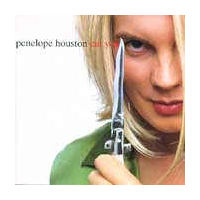
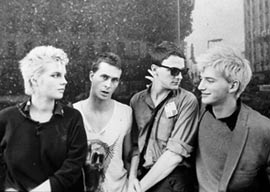
Penelope Houston & The Avengers
Web site:
Avengers/Penelope Houston: Official Site
Avengers/ Penelope Houston: Fan site
Penelope Houston: My Site
Penelope Houston Interview
Penelope Houston From Wikipedia, the free encyclopedia
The Avengers From Wikipedia, the free encyclopedia
The Avengers: My Space
The Avengers
Videos:
AVENGERS - The American In Me - Live at the Mabuhay Gardens 1978(?)
Avengers - We Are The One (2006)
Avengers live at CBGB 2006
Friday, September 08, 2006
Sunday, September 03, 2006
Sunday, August 27, 2006
Jayne/Wayne County & the Electric Chairs!!!

JAYNE COUNTY - MAN ENOUGH TO BE A WOMAN
RANT & RAVE WITH JAYNE COUNTY
Jayne County Pagan Child - Interview by Charles E. Hall
Forget the Statue of Liberty, Jayne County is the Queen of New York
Wayne/Jayne County and THE ELECTRIC CHAIRS
Jayne County vs. Gene Simmons
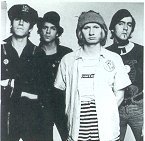
Wayne County & The Electric Chairs
Jayne County, formerly known as Wayne County
John "JJ" Johnson - DrumPunk
John "JJ" Johnson - DrumPunk MySpace
Saturday, August 26, 2006
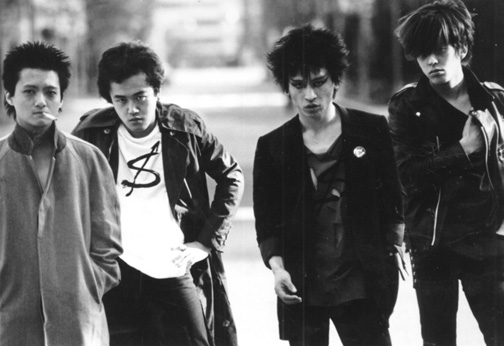
Endo Michiro & the Stalin
Web sites:
The Stalin: My space
The Stalin: KFTH The Stalin Page
The Stalin page on JaME U.K.
The Stalin
The Stalin
Michiro Endo
Michiro Endo: My Space

Videos:
The Stalin - Romantist video from Stop Jap lp
The Stalin - TRASH (Studio Live on TV 1982)
The Stalin - 1983 Tour
The Stalin - Gesuido No Pentensei (Live Final Concert 1985)
The Stalin - 365 Live 2001
Video Stalin concert
Panta & Michiro-?????
Endo Michiro Live
Tuesday, August 22, 2006
Saturday, August 19, 2006

Saturday, August 12, 2006
Wednesday, August 09, 2006

Sunday, July 30, 2006

Wednesday, July 26, 2006
The 50 albums that changed music
Sunday July 16, 2006
The Observer
1 The Velvet Underground and Nico
The Velvet Underground and Nico (1967)
Though it sold poorly on its initial release, this has since become arguably the most influential rock album of all time. The first art-rock album, it merges dreamy, druggy balladry ('Sunday Morning') with raw and uncompromising sonic experimentation ('Venus in Furs'), and is famously clothed in that Andy Warhol-designed 'banana' sleeve. Lou Reed's lyrics depicted a Warholian New York demi-monde where hard drugs and sexual experimentation held sway. Shocking then, and still utterly transfixing.
Without this, there'd be no ... Bowie, Roxy Music, Siouxsie and the Banshees and the Jesus and Mary Chain, among many others.
SOH
2 The Beatles
Sgt Pepper's Lonely Hearts Club Band (1967)
There are those who rate Revolver (1966) or 'the White Album' (1968) higher. But Sgt Pepper's made the watertight case for pop music as an art form in itself; until then, it was thought the silly, transient stuff of teenagers. At a time when all pop music was stringently manufactured, these Paul McCartney-driven melodies and George Martin-produced whorls of sound proved that untried ground was not only the most fertile stuff, but also the most viable commercially. It defined the Sixties and - for good and ill - gave white rock all its airs and graces.
Without this ... pop would be a very different beast.
KE
3 Kraftwerk
Trans-Europe Express (1977)
Released at the height of punk, this sleek, urbane, synthesised, intellectual work shared little ground with its contemporaries. Not that it wanted to. Kraftwerk operated from within a bubble of equipment and ideas which owed more to science and philosophy than mere entertainment. Still, this paean to the beauty of mechanised movement and European civilisation was a moving and exquisite album in itself. And, through a sample on Afrika Bambaataa's seminal 'Planet Rock', the German eggheads joined the dots with black American electro, giving rise to entire new genres.
Without this... no techno, no house, no Pet Shop Boys. The list is endless.
KE
4 NWA
Straight Outta Compton (1989)
Like a darker, more vengeful Public Enemy, NWA (Niggaz With Attitude) exposed the vicious realities of the West Coast gang culture on their lurid, fluent debut. Part aural reportage (sirens, gunshots, police radio), part thuggish swagger, Compton laid the blueprint for the most successful musical genre of the last 20 years, gangsta rap. It gave the world a new production mogul in Dr Dre, and gave voice to the frustrations that flared up into the LA riots in 1992. As befits an album boasting a song called 'Fuck tha Police', attention from the FBI, the Parents' Music Resource Centre and our own Metropolitan Police's Obscene Publications Squad sealed its notoriety.
Without this ... no Eminem, no 50 Cent, no Dizzee Rascal.
KE
5 Robert Johnson
King of the Delta Blues Singers (1961)
Described by Eric Clapton as 'the most important blues singer that ever lived', Johnson was an intensely private man, whose short life and mysterious death created an enduring mythology. He was said to have sold his soul to the devil at a crossroads in Mississippi in exchange for his finger-picking prowess. Johnson recorded a mere 29 songs, chief among them 'Hellhound on My Trail', but when it was finally issued, King of the Delta Blues Singers became one of the touchstones of the British blues scene.
Without this ... no Rolling Stones, Cream, Led Zeppelin.
SOH
6 Marvin Gaye
What's Going On (1971)
Gaye's career as tuxedo-clad heart-throb gave no hint he would cut a concept album dealing with civil rights, the Vietnam war and ghetto life. Equally startling was the music, softening and double-tracking Gaye's falsetto against a wash of bubbling percussion, swaying strings and chattering guitars. Motown boss Berry Gordy hated it but its disillusioned nobility caught the public mood. Led by the oft-covered 'Inner City Blues', it ushered in an era of socially aware soul.
Without this ... no Innervisions (Stevie Wonder) or Superfly (Curtis Mayfield).
NS
7 Patti Smith
Horses (1975)
Who would have thought punk rock was, in part, kickstarted by a girl? Poet, misfit and New York ligger, Patti channelled the spirits of Keith Richards, Bob Dylan and Rimbaud into female form, and onto an album whose febrile energy and Dionysian spirit helped light the touchpaper for New York punk. The Robert Mapplethorpe-shot cover, in which a hungry, mannish Patti stares down the viewer, defiantly broke with the music industry's treatment of women artists (sexy or girl-next-door) and still startles today.
Without this ... no REM, PJ Harvey, Razorlight. And no powerful female pop icons like Madonna.
KE
8 Bob Dylan
Bringing it All Back Home (1965)
The first folk-rock album? Maybe. Certainly the first augury of what was to come with the momentous 'Like a Rolling Stone'. Released in one of pop's pivotal years, Bringing it All Back Home fused hallucinatory lyricism and, on half of its tracks, a raw, ragged rock'n'roll thrust. On the opening song, 'Subterranean Homesick Blues', Dylan manages to pay homage to the Beats and Chuck Berry, while anticipating the surreal wordplay of rap.
Without this ... put simply, on this album and the follow-up, Highway 61 Revisited, Dylan invented modern rock music.
SOH
9 Elvis Presley
Elvis Presley (1956)
The King's first album was also the first example of how to cash in on a teenage craze. With Presleymania at full tilt, RCA simultaneously released a single, a four-track EP and an album, all with the same cover of Elvis in full, demented cry. They got their first million dollar album, the fans got a mix of rock-outs like 'Blue Suede Shoes', lascivious R&B and syrupy ballads.
Without this ... no King, no rock and roll madness, no Beatles first album, no pop sex symbols.
NS
10 The Beach Boys
Pet Sounds (1966)
Of late, Pet Sounds has replaced Sgt Pepper's as the critics' choice of Greatest Album of All Time. Composed by the increasingly reclusive Brian Wilson while the rest of the group were touring, it might well have been a solo album. The beauty resides not just in its compositional genius and instrumental invention, but in the elaborate vocal harmonies that imbue these sad songs with an almost heartbreaking grandeur.
Without this ... where to start? The Beatles acknowledged its influence; Dylan said of Brian Wilson, 'That ear! I mean, Jesus, he's got to will that to the Smithsonian.'
SOH
11 David Bowie
The Rise and Fall of Ziggy Stardust and the Spiders From Mars (1972)
Bowie's revolutionary mix of hard rock and glam pop was given an otherwordly look and feel by his coquettish alter ego Ziggy. It's not so much that every act that followed dyed their hair orange in homage to the spidery spaceman; more that they learned the value of creating a 'bubble' of image and presentation that fans could fall in love with.
Without this ... we'd be lost. No Sex Pistols, no Prince, no Madonna, no Duran Duran, no Boy George, no Kiss, no Bon Jovi, no 'Bohemian Rhapsody' ... I could go on.
LH
12 Miles Davis
Kind of Blue (1959)
A rare example of revolutionary music that almost everyone liked from the moment they heard it. Its cool, spacey, open-textured approach marked a complete break with the prevalent 'hard bop' style. The effect, based on simple scales, called modes, was fresh, delicate, approachable but surprisingly expressive. Others picked up on it and 'modal jazz' has been part of the language ever since. The album also became the media's favourite source of mood music.
Without this ... no ominous, brooding, atmospheric trumpet behind a million radio plays and TV documentaries.
DG
13 Frank Sinatra
Songs for Swingin' Lovers (1956)
The previous year Sinatra had cut In the Wee Small Hours, a brooding cycle of torch songs that was arguably pop's first concept album. Once again working with arranger Nelson Riddle, he presented its complement; a set of upbeat paeans to romance. Exhilarating performances of standards like 'I've Got You Under My Skin' defined Sinatra's urbane, finger-snapping persona for the rest of his career and pushed the record to number one in the first ever British album chart.
Without this ... the 'singer as song interpreter' wouldn't have been born, karaoke menus would be much diminished.
NS
14 Joni Mitchell
Blue (1971)
Though Carole King's Tapestry was the biggest-selling album of the era, it is Joni Mitchell's Blue that remains the most influential of all the early Seventies outings by confessional singer-songwriters. Joni laid bare her heart in a series of intimate songs about love, betrayal and emotional insecurity. It could have been hell (think James Taylor) but for the penetrating brilliance of the songwriting. Raw, spare and sophisticated, it remains the template for a certain kind of baroque female angst.
Without this ... no Tori Amos or Fiona Apple - and Elvis Costello and Prince have cited her as a prime influence.
SOH
15 Brian Eno
Discreet Music (1975)
Brian Eno, it is said, invented ambient music when he was stuck in a hospital bed unable to reach a radio that was playing too quietly, giving him the eureka moment that set the course not only for his post-Roxy Music career as an 'atmosphere'-enhancing producer, but for the future of electronic music.
Without this ... we wouldn't have David Bowie's Low or Heroes, the echoey guitars of U2'S The Edge, and no William Orbit, Orb, Juana Molina. To name but a few.
LH
16 Aretha Franklin
I Never Loved a Man the Way I love You (1967)
'R-E-S-P-E-C-T. Find out what it means to me!' Is there a more potent female lyric in pop? Franklin's Atlantic Records debut unleashed her soulful ferociousness upon an unsuspecting public, and both the singer and her album quickly became iconic symbols of black American pride.
Without this ... Tina Turner, Mariah Carey, girl power would not exist, and rudeboys would not spit 'res'pec' through kissed teeth.
EJS
17 The Stooges
Raw Power (1973)
Produced by David Bowie, who also helped re-form the band, Raw Power was the Stooges's late swansong, and their most influential album. The Detroit group were already legendary for incendiary live shows and first two albums, but Raw Power, though selling as poorly as its predecessors, was subsequently cited as a prime influence by virtually every group in the British punk scene.
Without this ... no punk, so no Sex Pistols (who covered 'No Fun'); no White Stripes.
SOH
18 The Clash
London Calling (1979)
The best record to come out of punk, or punk's death knell? On this double album, The Clash fused their rockabilly roots with their love of reggae, moving away from the choppy snarls of the scene that birthed them. This was the album that legitimised punk - hitherto a stroppy fad - into the rock canon. Its iconic cover, and songs about the Spanish Civil War brought left-wing politics firmly into musical fashion.
Without this ... would the west have come to love reggae, dub and ragga quite so much? We certainly would have no Manic Street Preachers ... or Green Day, or Rancid ... or possibly even Lily Allen.
KE
19 Mary J Blige
What's the 411? (1992)
When the Bronx-born 'Queen of Hip Hop Soul' catapulted her debut on to a legion of approving listeners, she unwittingly defined a new wave of R&B. Before Mary, R&B's roots were still firmly planted in soul and jazz (ie Aretha Franklin and Chaka Khan). The emergence of hip hop and this album from Blige and her mentor and producer Sean 'Puffy' Combs (aka P Diddy) gave birth to a new gritty sound, informed by the singer's harrowing past.
Without this ... no R&B/soul divide, which means no TLC, Beyonce, or Ashanti, to name just three.
EJS
20 The Byrds
Sweetheart of the Rodeo (1968)
At one inspired stroke, Sweetheart vanquished the cultural divide between acid-munching, peace-preaching long hairs and beer-swilling, flag-waving good old boys by creating the enduring hybrid of country-rock. Allying rippling guitars and silky vocal harmonies with a mix of country tradition ('I Am a Pilgrim') and Gram Parsons originals, the record irrevocably altered the perspective of two previously averse streams of Americana. The group even cut their hair to play the Grand Ole Opry.
Without this ... no Hotel California, no Willie Nelson, no Shania Twain.
NS
21 The Spice Girls
Spice (1996)
The music business has been cynically creating and marketing acts since the days of the wax cylinder, but on nothing like the scale of the Spice phenomenon, which was applied to crisps, soft drinks, you name it. Musically, the Spice's Motown-lite was unoriginal, but 'Girl Power', despite being a male invention, touched a nerve and defined a generation of tweenies who took it to heart.
Without this ... five-year-olds would not have become a prime target for pop marketeers. Most of all, there'd be no Posh'n'Becks.
NS
22 Kate Bush
The Hounds of Love (1985)
On Side One our Kate strikes a deal with God, throws her shoes in a lake and poses as a little boy riding a rain machine. Turn over, and she's drowning, exorcising demons and dancing an Irish jig. All this to a soundscape that employs the shiniest synthesised studio toys the Eighties had to offer in the service of one women's unique yet utterly English musical genius. Listen again to the delirious cacophany of 'Running Up That Hill', and it sounds like God struck that deal.
Without this ... Tori Amos would have spawned no earthquakes, Alison Goldfrapp would lack her juiciest cherries and romance would have withered on the vine.
JB
23 Augustus Pablo
King Tubby Meets Rockers Uptown (1976)
Jamaica's invention of dub - a stripped-down, echo-laden instrumental remix of a vocal track - was spawned principally on the B-sides of local reggae hits and in the island's competing sound-systems, with technician-engineer King Tubby as its master creator, a man who could 'play' the mixing console. This collection of ethereal melodies by melodica maestro Augustus Pablo distilled the art into album form. It would be years before the West caught up.
Without this ... no DJ remixes, no house, no rave.
NS
24 Youssou N'Dour
Immigres (1984)
The charismatic N'Dour, Senegal's top star, changed the West's perception of African musicians, just as he had revolutionised Senegalese music. Nothing sounded like the fusion on Immigres, with its lopsided rhythms, whooping talking drums and discordant horns, topped by N'Dour's supple, powerful vocals. Immigres also redefined the role of West African griot, addressing migration and African identity.
Without this ... N'Dour wouldn't have met Peter Gabriel, there'd have been no African presence at Live 8. In fact, 'world music' would not exist as a section in Western collections.
NS
25 James Brown
Live at the Apollo (1963)
This remains the live album by which all others are measured, and is still the best delineation of the raw power of primal soul music. It propelled James Brown into the mainstream, and paved the way for a string of propulsive hits like 'Papa's Got a Brand New Bag' (1965) and 'Cold Sweat' (1967). The catalyst for many great soul stylists, from Sly Stone to Otis Redding, it also provided an early lesson in dynamics for the young Michael Jackson.
Without this ... great chunks of hip hop - which has sampled Brown more than almost any other - would be missing.
SOH
26 Stevie Wonder
Songs in the Key of Life (1976)
This influenced virtually every modern soul and R&B singer, brimming with timeless classics like 'Isn't She Lovely', 'As' and 'Sir Duke'. The 21-tracker encompassed a vast range of life's issues - emotional, social, spiritual and environmental - all performed with bravado and a lightness of touch. No other R&B artist has sung about the quandaries of human existence with quite the same grace.
Without this ... no Alicia Keys, no John Legend - contemporary R&B would be empty and lifeless.
EJS
27 Jimi Hendrix
Are You Experienced (1967)
Looking and playing like a brother from another planet, Hendrix delivered the most dramatic debut in pop history. Marrying blues and psychedelia, dexterity and feedback trickery, it redefined the guitar's sonic possibilities, while beyond the fretboard pyrotechnics burnt a fierce artistic vision - 'Third Stone From the Sun' made Jimi rock's first (and still best travelled) cosmonaut.
Without this ... countless guitarists and cock-rockers might not have been (Stevie Ray Vaughan, Lenny Kravitz, even Miles Davis owes him), but most of all, without Experienced, there'd be no Jimi experience.
NS
28 Prince and the Revolution
Purple Rain (1984)
Prince had been plugging away with limited success for several years when the man in tiny pants reinvented himself as a purple-clad movie star. Like Michael Jackson, he felt that the way to gain crossover appeal was to run the musical gamut: in this case, from the minimalist funk of his earlier albums to the volume-at-11 rock of Jimi Hendrix. The title track is a monumental, fist-clenching rock ballad that, perversely, whetted our appetites for far worse examples by Christina Aguilera among others.
Without this ... no Janet Jackson, no Peaches, and certainly no Beck.
LH
29 Pink Floyd
The Dark Side of the Moon (1973)
Sounds like it was pretty tough to be in Pink Floyd in the early 1970s. You had all the money you could spend (ker-ching!) but you thought that was vulgar. You didn't get on with your bandmates because they all had superiority complexes. You couldn't enter the recording booth without having an existential crisis. Piper At The Gates of Dawn, their debut with the late Syd Barrett, turned out to be influential in a more positive sense (David Bowie, Blur).
Without this ... there'd be no Thom Yorke solo mumblings, and much less prog rock (if only ...).
LH
30 The Wailers
Catch a Fire (1973)
Alongside The Harder They Come (movie and soundtrack), Catch a Fire changed the perception of reggae from eccentric, lightweight pop to a music of mystery and power. Dressed in a snappy Zippo lighter sleeve, and launched with rock razzmatazz, it delivered a polished, guitar-sweetened version of what Bob Marley, Peter Tosh and Bunny Wailer had made when white audiences weren't listening. By turns militant, mystic and sexy, it helped make Bob Marley the first Third World superstar.
Without this ... no Aswad or Steel Pulse, no native American or Maori or African reggae bands.
NS
31 The Stone Roses
The Stone Roses (1989)
Until the late Eighties, Manchester was thought to be a forbidding, dour place where the ghost of Ian Curtis still clanked about. The Stone Roses' concatenation of sweet West Coast psychedelia and the lairy, loved-up rave culture was as unforeseeable as it was seismic. Ecstasy pulled the sniffy rock kids away from their Smiths records and into clubland; the result was an album whose woozy words and funky drumming sounded as guileless as it did hedonistic.
Without this ... well, a bit of the Roses remains in the DNA of every British guitar band since.
KE
32 Otis Redding
Otis Blue (1965)
Until Stax Records and Otis Redding arrived, the Southern states were a place you had to leave to make it (unless you were a country singer). Recorded weeks after the death of Redding's idol, Sam Cooke, the album cast Otis as Cooke's successor, an embodiment of young black America with white appeal - alongside Cooke's 'A Change is Gonna Come' was the Stones's 'Satisfaction'. With terrific backings from the MGs and the Markeys horns behind Otis's rasping vocals, it defined 'soul'.
Without this ... no Aretha Franklin singing 'Respect', no Al Green, and no Terence Trent D'Arby.
NS
33 Herbie Hancock
Head Hunters (1973)
It definitively wedded jazz to funk and R&B, and did it with such joyful confidence that it launched a whole new, open-minded approach to the music. Equally important was the use of electronic keyboards, then in their infancy, which vastly expanded the range of available textures. Head Hunters kickstarted the stylistic and ethnic fusions that have enlivened jazz for 30 years.
Without this ... suffice to say, almost everything in the jazz-funk idiom can be traced back to this.
DG
34 Black Sabbath
Black Sabbath (1970)
A mere 30 minutes long, this was none the less the album where heavy metal was first forged. Its ponderous tempos, cod-satanic imagery (bassist Geezer Butler was a Roman Catholic and Dennis Wheatley fan), Tony Iommi's sledgehammer guitar riffs and Ozzy Osbourne's shrieking vocals all went on to define the genre and shaped most arena rock of the Seventies and Eighties.
Without this ... no Spinal Tap, no grunge or Kurt Cobain and, of course, no Osbournes.
NS
35 The Ramones
The Ramones (1976)
'Fun disappeared from music in 1974,' claimed singer Joey Ramone. To restore it took he and his three 'brothers' just one album and 16 tracks, all under three minutes. Brevity was the New York punk rockers' first lesson to the world, along with speed, a distorted guitar thrash and a knowing line in faux-dumb lyrics. In an era of 'progressive' rock pomposity and 12-minute tracks, the Ramones' back-to-basics approach was rousing and confrontational.
Without this ... no fun.
NS
36 The Who
My Generation (1965)
Alongside the equally influential Small Faces, The Who were the quintessential British mod group. Long before they recorded the first rock opera, Tommy, they unleashed a stream of singles that articulated all the youthful pent-up frustration of Sixties London before it started to swing. Their 1965 debut album, My Generation, included the defiant and celebratory 'The Kids Are Alright' and the ultimate mod anthem, 'My Generation', with its infamous line, 'I hope I die before I get old.' Angry aggressive art-school pop with attitude to burn.
Without this ... no Paul Weller, no Blur and, God help us, no Ordinary Boys either.
NS
37 Massive AttackBlue Lines (1991)
Obliterators of rap's boundaries, Massive Attack pioneered the cinematic trip hop movement. After graduating from one of Britain's premier sound systems, the Bristol-based Wild Bunch, Andrew 'Mushroom' Vowles and Grant 'Daddy G' Marshall joined forces with graffiti artist 3D. Massive Attack's debut LP spawned the unforgettable 'Unfinished Sympathy' and remains a modern classic.
Without this ... no Roots Manuva, no Dizzee. In fact, there would be no British urban music scene to speak of.
EJS
38 Radiohead
The Bends (1995)
In parallel with Jeff Buckley, Radiohead's Thom Yorke popularised the angst-laden falsetto, a thoughtful opposite to the chest-beating lad-rock personified by Oasis's Liam Gallagher. Sounding girly to a backdrop of churning guitars became a much-copied idea, however, one which eventually coalesced into an entire decade of sound.
Without this ... Coldplay would not exist, nor Keane, nor James Blunt.
KE
39 Michael Jackson
Thriller (1982)
Pure, startling genius from beginning to end, Michael Jackson and producer Quincy Jones seemed hellbent on creating the biggest, most universally appealing pop album ever made. Jones introduced elements of rock into soul and vice versa in such a way that it's now no surprise to hear a pop record that mashes up more marginal genres into a form that will have universal relevance.
Without this ... no megastars such as Justin Timberlake or Madonna, no wide-appeal uber-producers such as Timbaland or Pharrell Williams.
LH
40 Run DMC
Run DMC (1984)
Before them came block-rocking DJ Grandmaster Flash and the Godfather, Afrika Bambaataa, but it was Run DMC who carved the prototype for today's hip hop MCs. Their self-titled debut - the first rap album to go gold - was rough around the edges and catchy as hell. As Rev Run spat, 'Unemployment at a record high/ People coming, people going, people born to die', the way was paved for conscious and political rap.
Without this ... no Public Enemy, Roots and Nas.
EJS
41 Chic
Chic (1977)
The Chic Organisation revolutionised disco music in the late Seventies, reclaiming it from the naff Bee Gees and ensuring the pre-eminence of slickly produced party music in the charts for the next three decades. Its main men Nile Rodgers and Bernard Edwards patented a sound on their 1977 debut that was influential on bands from Duran Duran to Orange Juice. They also created a hit-making formula that mixed dance beats with monster hooks.
Without this ... no Destiny's Child.
LH
42 The Smiths
The Smiths (1984)
Yearning, melodic, jangly, and very northern, The Smiths' first album was quite unlike anything that had gone before. It helped that Morrissey was a one-off and that Johnny Marr had taken all the best riffs from Sixties pop, punk and disco and melded them into his own unique style. But there was something magical about their sound that endless successors have tried to replicate.
Without this ... there'd be no Belle and Sebastian, no Suede, no Oasis, and no Libertines - at the very least.
LH
43 Primal Scream
Screamadelica (1991)
Thanks to producer Andrew Weatherall and some debauched raving, this former fey indie outfit enthusiastically took on dance music's heady rushes. It was a conversion bordering on the Damascene, but one being mirrored in halls of residence, cars, clubs and bedsits all around the nation. Screamadelica brought hedonism crashing into the mainstream.
Without this ... no lad culture - it was no accident that a mag founded in 1994 shared its name with Screamadelica's defining single, 'Loaded'.
KE
44 Talking Heads
Fear of Music (1979)
There's something refreshingly jolly about the modern-life paranoia expressed by chief Talking Head David Byrne on this album that moany old Radiohead could learn from. Opening track 'I Zimbra' splices funk with afrobeat, paving the way for Byrne and Eno's mould-breaking My Life in the Bush of Ghosts album a few years later.
Without this ... Paul Simon's Graceland might never have been made.
LH
45 Fairport Convention
Liege and Lief (1969)
The birth of English folk-rock. Considered an act of heresy by folk purists, this electrified album fragmented the band. No matter, the opening cry of 'Come all you roving minstrels' proved galvanic.
Without this ... no Celtic revivalists like the Pogues and Waterboys or descendants like the Levellers.
NS
46 The Human League
Dare (1981)
Until Dare, synthesisers meant solemnity. Phil Oakey's reinvention of the group as chirpy popsters, complete with two flailing, girl-next-door vocalists, feminised electronica.
Without this ... and Oakey's lop-sided haircut, squads of new romantics and synth-pop acts would have been lost.
NS
47 Nirvana
Nevermind (1991)
You might argue Nirvana's landmark album changed nothing whatsoever. All their best seditious instincts came to nothing, after all. And yet Nevermind still rocks mightily, capturing a moment when the vituperative US underground imposed its agenda on the staid mainstream. Without this ... no Seattle scene, no Britpop, no Pete Doherty.
KE
48 The Strokes
Is This It? (2001)
Five good-looking young men hauled the jangling sound of Television and the Velvet Underground into the new millennium, reinvigorating rock's obsession with having a good time.
Without this ... a fine brood of heirs would not have been spawned: among them, Franz Ferdinand and the Libertines.
KE
49 De La Soul
3 Feet High and Rising (1989)
Ten years after hip hop's arrival, its original joie de vivre had been subsumed by macho braggadocio. Three Feet High made hip hop playful again, with light rhythms, unusual sound samples and its talk of the D.A.I.S.Y. age ('Da Inner Sound Y'all') earning the trio a 'hippy' label.
Without this ... thoughtful hip hop acts like the Jungle Brothers and PM Dawn wouldn't have arrived.
NS
50 LFO
Frequencies (1991)
Acid house was sniffed at as a fad until it started producing 'proper' albums. Frequencies was its first masterpiece. Updating the pristine blueprint of Kraftwerk with house, acid, ambient and hip hop, it made dance music legitimate to album-buyers.
Without this ... no success for Orbital, Underworld, Leftfield, Chemical Brothers or Aphex Twin.
KE
· Have your say
Restricting our anniversary list to a mere 50 was a tortuous process. We know you have opinions on these highly emotive matters, so join the debate and make a case for your choice of record at observer.co.uk/blog
The Observer
1 The Velvet Underground and Nico
The Velvet Underground and Nico (1967)
Though it sold poorly on its initial release, this has since become arguably the most influential rock album of all time. The first art-rock album, it merges dreamy, druggy balladry ('Sunday Morning') with raw and uncompromising sonic experimentation ('Venus in Furs'), and is famously clothed in that Andy Warhol-designed 'banana' sleeve. Lou Reed's lyrics depicted a Warholian New York demi-monde where hard drugs and sexual experimentation held sway. Shocking then, and still utterly transfixing.
Without this, there'd be no ... Bowie, Roxy Music, Siouxsie and the Banshees and the Jesus and Mary Chain, among many others.
SOH
2 The Beatles
Sgt Pepper's Lonely Hearts Club Band (1967)
There are those who rate Revolver (1966) or 'the White Album' (1968) higher. But Sgt Pepper's made the watertight case for pop music as an art form in itself; until then, it was thought the silly, transient stuff of teenagers. At a time when all pop music was stringently manufactured, these Paul McCartney-driven melodies and George Martin-produced whorls of sound proved that untried ground was not only the most fertile stuff, but also the most viable commercially. It defined the Sixties and - for good and ill - gave white rock all its airs and graces.
Without this ... pop would be a very different beast.
KE
3 Kraftwerk
Trans-Europe Express (1977)
Released at the height of punk, this sleek, urbane, synthesised, intellectual work shared little ground with its contemporaries. Not that it wanted to. Kraftwerk operated from within a bubble of equipment and ideas which owed more to science and philosophy than mere entertainment. Still, this paean to the beauty of mechanised movement and European civilisation was a moving and exquisite album in itself. And, through a sample on Afrika Bambaataa's seminal 'Planet Rock', the German eggheads joined the dots with black American electro, giving rise to entire new genres.
Without this... no techno, no house, no Pet Shop Boys. The list is endless.
KE
4 NWA
Straight Outta Compton (1989)
Like a darker, more vengeful Public Enemy, NWA (Niggaz With Attitude) exposed the vicious realities of the West Coast gang culture on their lurid, fluent debut. Part aural reportage (sirens, gunshots, police radio), part thuggish swagger, Compton laid the blueprint for the most successful musical genre of the last 20 years, gangsta rap. It gave the world a new production mogul in Dr Dre, and gave voice to the frustrations that flared up into the LA riots in 1992. As befits an album boasting a song called 'Fuck tha Police', attention from the FBI, the Parents' Music Resource Centre and our own Metropolitan Police's Obscene Publications Squad sealed its notoriety.
Without this ... no Eminem, no 50 Cent, no Dizzee Rascal.
KE
5 Robert Johnson
King of the Delta Blues Singers (1961)
Described by Eric Clapton as 'the most important blues singer that ever lived', Johnson was an intensely private man, whose short life and mysterious death created an enduring mythology. He was said to have sold his soul to the devil at a crossroads in Mississippi in exchange for his finger-picking prowess. Johnson recorded a mere 29 songs, chief among them 'Hellhound on My Trail', but when it was finally issued, King of the Delta Blues Singers became one of the touchstones of the British blues scene.
Without this ... no Rolling Stones, Cream, Led Zeppelin.
SOH
6 Marvin Gaye
What's Going On (1971)
Gaye's career as tuxedo-clad heart-throb gave no hint he would cut a concept album dealing with civil rights, the Vietnam war and ghetto life. Equally startling was the music, softening and double-tracking Gaye's falsetto against a wash of bubbling percussion, swaying strings and chattering guitars. Motown boss Berry Gordy hated it but its disillusioned nobility caught the public mood. Led by the oft-covered 'Inner City Blues', it ushered in an era of socially aware soul.
Without this ... no Innervisions (Stevie Wonder) or Superfly (Curtis Mayfield).
NS
7 Patti Smith
Horses (1975)
Who would have thought punk rock was, in part, kickstarted by a girl? Poet, misfit and New York ligger, Patti channelled the spirits of Keith Richards, Bob Dylan and Rimbaud into female form, and onto an album whose febrile energy and Dionysian spirit helped light the touchpaper for New York punk. The Robert Mapplethorpe-shot cover, in which a hungry, mannish Patti stares down the viewer, defiantly broke with the music industry's treatment of women artists (sexy or girl-next-door) and still startles today.
Without this ... no REM, PJ Harvey, Razorlight. And no powerful female pop icons like Madonna.
KE
8 Bob Dylan
Bringing it All Back Home (1965)
The first folk-rock album? Maybe. Certainly the first augury of what was to come with the momentous 'Like a Rolling Stone'. Released in one of pop's pivotal years, Bringing it All Back Home fused hallucinatory lyricism and, on half of its tracks, a raw, ragged rock'n'roll thrust. On the opening song, 'Subterranean Homesick Blues', Dylan manages to pay homage to the Beats and Chuck Berry, while anticipating the surreal wordplay of rap.
Without this ... put simply, on this album and the follow-up, Highway 61 Revisited, Dylan invented modern rock music.
SOH
9 Elvis Presley
Elvis Presley (1956)
The King's first album was also the first example of how to cash in on a teenage craze. With Presleymania at full tilt, RCA simultaneously released a single, a four-track EP and an album, all with the same cover of Elvis in full, demented cry. They got their first million dollar album, the fans got a mix of rock-outs like 'Blue Suede Shoes', lascivious R&B and syrupy ballads.
Without this ... no King, no rock and roll madness, no Beatles first album, no pop sex symbols.
NS
10 The Beach Boys
Pet Sounds (1966)
Of late, Pet Sounds has replaced Sgt Pepper's as the critics' choice of Greatest Album of All Time. Composed by the increasingly reclusive Brian Wilson while the rest of the group were touring, it might well have been a solo album. The beauty resides not just in its compositional genius and instrumental invention, but in the elaborate vocal harmonies that imbue these sad songs with an almost heartbreaking grandeur.
Without this ... where to start? The Beatles acknowledged its influence; Dylan said of Brian Wilson, 'That ear! I mean, Jesus, he's got to will that to the Smithsonian.'
SOH
11 David Bowie
The Rise and Fall of Ziggy Stardust and the Spiders From Mars (1972)
Bowie's revolutionary mix of hard rock and glam pop was given an otherwordly look and feel by his coquettish alter ego Ziggy. It's not so much that every act that followed dyed their hair orange in homage to the spidery spaceman; more that they learned the value of creating a 'bubble' of image and presentation that fans could fall in love with.
Without this ... we'd be lost. No Sex Pistols, no Prince, no Madonna, no Duran Duran, no Boy George, no Kiss, no Bon Jovi, no 'Bohemian Rhapsody' ... I could go on.
LH
12 Miles Davis
Kind of Blue (1959)
A rare example of revolutionary music that almost everyone liked from the moment they heard it. Its cool, spacey, open-textured approach marked a complete break with the prevalent 'hard bop' style. The effect, based on simple scales, called modes, was fresh, delicate, approachable but surprisingly expressive. Others picked up on it and 'modal jazz' has been part of the language ever since. The album also became the media's favourite source of mood music.
Without this ... no ominous, brooding, atmospheric trumpet behind a million radio plays and TV documentaries.
DG
13 Frank Sinatra
Songs for Swingin' Lovers (1956)
The previous year Sinatra had cut In the Wee Small Hours, a brooding cycle of torch songs that was arguably pop's first concept album. Once again working with arranger Nelson Riddle, he presented its complement; a set of upbeat paeans to romance. Exhilarating performances of standards like 'I've Got You Under My Skin' defined Sinatra's urbane, finger-snapping persona for the rest of his career and pushed the record to number one in the first ever British album chart.
Without this ... the 'singer as song interpreter' wouldn't have been born, karaoke menus would be much diminished.
NS
14 Joni Mitchell
Blue (1971)
Though Carole King's Tapestry was the biggest-selling album of the era, it is Joni Mitchell's Blue that remains the most influential of all the early Seventies outings by confessional singer-songwriters. Joni laid bare her heart in a series of intimate songs about love, betrayal and emotional insecurity. It could have been hell (think James Taylor) but for the penetrating brilliance of the songwriting. Raw, spare and sophisticated, it remains the template for a certain kind of baroque female angst.
Without this ... no Tori Amos or Fiona Apple - and Elvis Costello and Prince have cited her as a prime influence.
SOH
15 Brian Eno
Discreet Music (1975)
Brian Eno, it is said, invented ambient music when he was stuck in a hospital bed unable to reach a radio that was playing too quietly, giving him the eureka moment that set the course not only for his post-Roxy Music career as an 'atmosphere'-enhancing producer, but for the future of electronic music.
Without this ... we wouldn't have David Bowie's Low or Heroes, the echoey guitars of U2'S The Edge, and no William Orbit, Orb, Juana Molina. To name but a few.
LH
16 Aretha Franklin
I Never Loved a Man the Way I love You (1967)
'R-E-S-P-E-C-T. Find out what it means to me!' Is there a more potent female lyric in pop? Franklin's Atlantic Records debut unleashed her soulful ferociousness upon an unsuspecting public, and both the singer and her album quickly became iconic symbols of black American pride.
Without this ... Tina Turner, Mariah Carey, girl power would not exist, and rudeboys would not spit 'res'pec' through kissed teeth.
EJS
17 The Stooges
Raw Power (1973)
Produced by David Bowie, who also helped re-form the band, Raw Power was the Stooges's late swansong, and their most influential album. The Detroit group were already legendary for incendiary live shows and first two albums, but Raw Power, though selling as poorly as its predecessors, was subsequently cited as a prime influence by virtually every group in the British punk scene.
Without this ... no punk, so no Sex Pistols (who covered 'No Fun'); no White Stripes.
SOH
18 The Clash
London Calling (1979)
The best record to come out of punk, or punk's death knell? On this double album, The Clash fused their rockabilly roots with their love of reggae, moving away from the choppy snarls of the scene that birthed them. This was the album that legitimised punk - hitherto a stroppy fad - into the rock canon. Its iconic cover, and songs about the Spanish Civil War brought left-wing politics firmly into musical fashion.
Without this ... would the west have come to love reggae, dub and ragga quite so much? We certainly would have no Manic Street Preachers ... or Green Day, or Rancid ... or possibly even Lily Allen.
KE
19 Mary J Blige
What's the 411? (1992)
When the Bronx-born 'Queen of Hip Hop Soul' catapulted her debut on to a legion of approving listeners, she unwittingly defined a new wave of R&B. Before Mary, R&B's roots were still firmly planted in soul and jazz (ie Aretha Franklin and Chaka Khan). The emergence of hip hop and this album from Blige and her mentor and producer Sean 'Puffy' Combs (aka P Diddy) gave birth to a new gritty sound, informed by the singer's harrowing past.
Without this ... no R&B/soul divide, which means no TLC, Beyonce, or Ashanti, to name just three.
EJS
20 The Byrds
Sweetheart of the Rodeo (1968)
At one inspired stroke, Sweetheart vanquished the cultural divide between acid-munching, peace-preaching long hairs and beer-swilling, flag-waving good old boys by creating the enduring hybrid of country-rock. Allying rippling guitars and silky vocal harmonies with a mix of country tradition ('I Am a Pilgrim') and Gram Parsons originals, the record irrevocably altered the perspective of two previously averse streams of Americana. The group even cut their hair to play the Grand Ole Opry.
Without this ... no Hotel California, no Willie Nelson, no Shania Twain.
NS
21 The Spice Girls
Spice (1996)
The music business has been cynically creating and marketing acts since the days of the wax cylinder, but on nothing like the scale of the Spice phenomenon, which was applied to crisps, soft drinks, you name it. Musically, the Spice's Motown-lite was unoriginal, but 'Girl Power', despite being a male invention, touched a nerve and defined a generation of tweenies who took it to heart.
Without this ... five-year-olds would not have become a prime target for pop marketeers. Most of all, there'd be no Posh'n'Becks.
NS
22 Kate Bush
The Hounds of Love (1985)
On Side One our Kate strikes a deal with God, throws her shoes in a lake and poses as a little boy riding a rain machine. Turn over, and she's drowning, exorcising demons and dancing an Irish jig. All this to a soundscape that employs the shiniest synthesised studio toys the Eighties had to offer in the service of one women's unique yet utterly English musical genius. Listen again to the delirious cacophany of 'Running Up That Hill', and it sounds like God struck that deal.
Without this ... Tori Amos would have spawned no earthquakes, Alison Goldfrapp would lack her juiciest cherries and romance would have withered on the vine.
JB
23 Augustus Pablo
King Tubby Meets Rockers Uptown (1976)
Jamaica's invention of dub - a stripped-down, echo-laden instrumental remix of a vocal track - was spawned principally on the B-sides of local reggae hits and in the island's competing sound-systems, with technician-engineer King Tubby as its master creator, a man who could 'play' the mixing console. This collection of ethereal melodies by melodica maestro Augustus Pablo distilled the art into album form. It would be years before the West caught up.
Without this ... no DJ remixes, no house, no rave.
NS
24 Youssou N'Dour
Immigres (1984)
The charismatic N'Dour, Senegal's top star, changed the West's perception of African musicians, just as he had revolutionised Senegalese music. Nothing sounded like the fusion on Immigres, with its lopsided rhythms, whooping talking drums and discordant horns, topped by N'Dour's supple, powerful vocals. Immigres also redefined the role of West African griot, addressing migration and African identity.
Without this ... N'Dour wouldn't have met Peter Gabriel, there'd have been no African presence at Live 8. In fact, 'world music' would not exist as a section in Western collections.
NS
25 James Brown
Live at the Apollo (1963)
This remains the live album by which all others are measured, and is still the best delineation of the raw power of primal soul music. It propelled James Brown into the mainstream, and paved the way for a string of propulsive hits like 'Papa's Got a Brand New Bag' (1965) and 'Cold Sweat' (1967). The catalyst for many great soul stylists, from Sly Stone to Otis Redding, it also provided an early lesson in dynamics for the young Michael Jackson.
Without this ... great chunks of hip hop - which has sampled Brown more than almost any other - would be missing.
SOH
26 Stevie Wonder
Songs in the Key of Life (1976)
This influenced virtually every modern soul and R&B singer, brimming with timeless classics like 'Isn't She Lovely', 'As' and 'Sir Duke'. The 21-tracker encompassed a vast range of life's issues - emotional, social, spiritual and environmental - all performed with bravado and a lightness of touch. No other R&B artist has sung about the quandaries of human existence with quite the same grace.
Without this ... no Alicia Keys, no John Legend - contemporary R&B would be empty and lifeless.
EJS
27 Jimi Hendrix
Are You Experienced (1967)
Looking and playing like a brother from another planet, Hendrix delivered the most dramatic debut in pop history. Marrying blues and psychedelia, dexterity and feedback trickery, it redefined the guitar's sonic possibilities, while beyond the fretboard pyrotechnics burnt a fierce artistic vision - 'Third Stone From the Sun' made Jimi rock's first (and still best travelled) cosmonaut.
Without this ... countless guitarists and cock-rockers might not have been (Stevie Ray Vaughan, Lenny Kravitz, even Miles Davis owes him), but most of all, without Experienced, there'd be no Jimi experience.
NS
28 Prince and the Revolution
Purple Rain (1984)
Prince had been plugging away with limited success for several years when the man in tiny pants reinvented himself as a purple-clad movie star. Like Michael Jackson, he felt that the way to gain crossover appeal was to run the musical gamut: in this case, from the minimalist funk of his earlier albums to the volume-at-11 rock of Jimi Hendrix. The title track is a monumental, fist-clenching rock ballad that, perversely, whetted our appetites for far worse examples by Christina Aguilera among others.
Without this ... no Janet Jackson, no Peaches, and certainly no Beck.
LH
29 Pink Floyd
The Dark Side of the Moon (1973)
Sounds like it was pretty tough to be in Pink Floyd in the early 1970s. You had all the money you could spend (ker-ching!) but you thought that was vulgar. You didn't get on with your bandmates because they all had superiority complexes. You couldn't enter the recording booth without having an existential crisis. Piper At The Gates of Dawn, their debut with the late Syd Barrett, turned out to be influential in a more positive sense (David Bowie, Blur).
Without this ... there'd be no Thom Yorke solo mumblings, and much less prog rock (if only ...).
LH
30 The Wailers
Catch a Fire (1973)
Alongside The Harder They Come (movie and soundtrack), Catch a Fire changed the perception of reggae from eccentric, lightweight pop to a music of mystery and power. Dressed in a snappy Zippo lighter sleeve, and launched with rock razzmatazz, it delivered a polished, guitar-sweetened version of what Bob Marley, Peter Tosh and Bunny Wailer had made when white audiences weren't listening. By turns militant, mystic and sexy, it helped make Bob Marley the first Third World superstar.
Without this ... no Aswad or Steel Pulse, no native American or Maori or African reggae bands.
NS
31 The Stone Roses
The Stone Roses (1989)
Until the late Eighties, Manchester was thought to be a forbidding, dour place where the ghost of Ian Curtis still clanked about. The Stone Roses' concatenation of sweet West Coast psychedelia and the lairy, loved-up rave culture was as unforeseeable as it was seismic. Ecstasy pulled the sniffy rock kids away from their Smiths records and into clubland; the result was an album whose woozy words and funky drumming sounded as guileless as it did hedonistic.
Without this ... well, a bit of the Roses remains in the DNA of every British guitar band since.
KE
32 Otis Redding
Otis Blue (1965)
Until Stax Records and Otis Redding arrived, the Southern states were a place you had to leave to make it (unless you were a country singer). Recorded weeks after the death of Redding's idol, Sam Cooke, the album cast Otis as Cooke's successor, an embodiment of young black America with white appeal - alongside Cooke's 'A Change is Gonna Come' was the Stones's 'Satisfaction'. With terrific backings from the MGs and the Markeys horns behind Otis's rasping vocals, it defined 'soul'.
Without this ... no Aretha Franklin singing 'Respect', no Al Green, and no Terence Trent D'Arby.
NS
33 Herbie Hancock
Head Hunters (1973)
It definitively wedded jazz to funk and R&B, and did it with such joyful confidence that it launched a whole new, open-minded approach to the music. Equally important was the use of electronic keyboards, then in their infancy, which vastly expanded the range of available textures. Head Hunters kickstarted the stylistic and ethnic fusions that have enlivened jazz for 30 years.
Without this ... suffice to say, almost everything in the jazz-funk idiom can be traced back to this.
DG
34 Black Sabbath
Black Sabbath (1970)
A mere 30 minutes long, this was none the less the album where heavy metal was first forged. Its ponderous tempos, cod-satanic imagery (bassist Geezer Butler was a Roman Catholic and Dennis Wheatley fan), Tony Iommi's sledgehammer guitar riffs and Ozzy Osbourne's shrieking vocals all went on to define the genre and shaped most arena rock of the Seventies and Eighties.
Without this ... no Spinal Tap, no grunge or Kurt Cobain and, of course, no Osbournes.
NS
35 The Ramones
The Ramones (1976)
'Fun disappeared from music in 1974,' claimed singer Joey Ramone. To restore it took he and his three 'brothers' just one album and 16 tracks, all under three minutes. Brevity was the New York punk rockers' first lesson to the world, along with speed, a distorted guitar thrash and a knowing line in faux-dumb lyrics. In an era of 'progressive' rock pomposity and 12-minute tracks, the Ramones' back-to-basics approach was rousing and confrontational.
Without this ... no fun.
NS
36 The Who
My Generation (1965)
Alongside the equally influential Small Faces, The Who were the quintessential British mod group. Long before they recorded the first rock opera, Tommy, they unleashed a stream of singles that articulated all the youthful pent-up frustration of Sixties London before it started to swing. Their 1965 debut album, My Generation, included the defiant and celebratory 'The Kids Are Alright' and the ultimate mod anthem, 'My Generation', with its infamous line, 'I hope I die before I get old.' Angry aggressive art-school pop with attitude to burn.
Without this ... no Paul Weller, no Blur and, God help us, no Ordinary Boys either.
NS
37 Massive AttackBlue Lines (1991)
Obliterators of rap's boundaries, Massive Attack pioneered the cinematic trip hop movement. After graduating from one of Britain's premier sound systems, the Bristol-based Wild Bunch, Andrew 'Mushroom' Vowles and Grant 'Daddy G' Marshall joined forces with graffiti artist 3D. Massive Attack's debut LP spawned the unforgettable 'Unfinished Sympathy' and remains a modern classic.
Without this ... no Roots Manuva, no Dizzee. In fact, there would be no British urban music scene to speak of.
EJS
38 Radiohead
The Bends (1995)
In parallel with Jeff Buckley, Radiohead's Thom Yorke popularised the angst-laden falsetto, a thoughtful opposite to the chest-beating lad-rock personified by Oasis's Liam Gallagher. Sounding girly to a backdrop of churning guitars became a much-copied idea, however, one which eventually coalesced into an entire decade of sound.
Without this ... Coldplay would not exist, nor Keane, nor James Blunt.
KE
39 Michael Jackson
Thriller (1982)
Pure, startling genius from beginning to end, Michael Jackson and producer Quincy Jones seemed hellbent on creating the biggest, most universally appealing pop album ever made. Jones introduced elements of rock into soul and vice versa in such a way that it's now no surprise to hear a pop record that mashes up more marginal genres into a form that will have universal relevance.
Without this ... no megastars such as Justin Timberlake or Madonna, no wide-appeal uber-producers such as Timbaland or Pharrell Williams.
LH
40 Run DMC
Run DMC (1984)
Before them came block-rocking DJ Grandmaster Flash and the Godfather, Afrika Bambaataa, but it was Run DMC who carved the prototype for today's hip hop MCs. Their self-titled debut - the first rap album to go gold - was rough around the edges and catchy as hell. As Rev Run spat, 'Unemployment at a record high/ People coming, people going, people born to die', the way was paved for conscious and political rap.
Without this ... no Public Enemy, Roots and Nas.
EJS
41 Chic
Chic (1977)
The Chic Organisation revolutionised disco music in the late Seventies, reclaiming it from the naff Bee Gees and ensuring the pre-eminence of slickly produced party music in the charts for the next three decades. Its main men Nile Rodgers and Bernard Edwards patented a sound on their 1977 debut that was influential on bands from Duran Duran to Orange Juice. They also created a hit-making formula that mixed dance beats with monster hooks.
Without this ... no Destiny's Child.
LH
42 The Smiths
The Smiths (1984)
Yearning, melodic, jangly, and very northern, The Smiths' first album was quite unlike anything that had gone before. It helped that Morrissey was a one-off and that Johnny Marr had taken all the best riffs from Sixties pop, punk and disco and melded them into his own unique style. But there was something magical about their sound that endless successors have tried to replicate.
Without this ... there'd be no Belle and Sebastian, no Suede, no Oasis, and no Libertines - at the very least.
LH
43 Primal Scream
Screamadelica (1991)
Thanks to producer Andrew Weatherall and some debauched raving, this former fey indie outfit enthusiastically took on dance music's heady rushes. It was a conversion bordering on the Damascene, but one being mirrored in halls of residence, cars, clubs and bedsits all around the nation. Screamadelica brought hedonism crashing into the mainstream.
Without this ... no lad culture - it was no accident that a mag founded in 1994 shared its name with Screamadelica's defining single, 'Loaded'.
KE
44 Talking Heads
Fear of Music (1979)
There's something refreshingly jolly about the modern-life paranoia expressed by chief Talking Head David Byrne on this album that moany old Radiohead could learn from. Opening track 'I Zimbra' splices funk with afrobeat, paving the way for Byrne and Eno's mould-breaking My Life in the Bush of Ghosts album a few years later.
Without this ... Paul Simon's Graceland might never have been made.
LH
45 Fairport Convention
Liege and Lief (1969)
The birth of English folk-rock. Considered an act of heresy by folk purists, this electrified album fragmented the band. No matter, the opening cry of 'Come all you roving minstrels' proved galvanic.
Without this ... no Celtic revivalists like the Pogues and Waterboys or descendants like the Levellers.
NS
46 The Human League
Dare (1981)
Until Dare, synthesisers meant solemnity. Phil Oakey's reinvention of the group as chirpy popsters, complete with two flailing, girl-next-door vocalists, feminised electronica.
Without this ... and Oakey's lop-sided haircut, squads of new romantics and synth-pop acts would have been lost.
NS
47 Nirvana
Nevermind (1991)
You might argue Nirvana's landmark album changed nothing whatsoever. All their best seditious instincts came to nothing, after all. And yet Nevermind still rocks mightily, capturing a moment when the vituperative US underground imposed its agenda on the staid mainstream. Without this ... no Seattle scene, no Britpop, no Pete Doherty.
KE
48 The Strokes
Is This It? (2001)
Five good-looking young men hauled the jangling sound of Television and the Velvet Underground into the new millennium, reinvigorating rock's obsession with having a good time.
Without this ... a fine brood of heirs would not have been spawned: among them, Franz Ferdinand and the Libertines.
KE
49 De La Soul
3 Feet High and Rising (1989)
Ten years after hip hop's arrival, its original joie de vivre had been subsumed by macho braggadocio. Three Feet High made hip hop playful again, with light rhythms, unusual sound samples and its talk of the D.A.I.S.Y. age ('Da Inner Sound Y'all') earning the trio a 'hippy' label.
Without this ... thoughtful hip hop acts like the Jungle Brothers and PM Dawn wouldn't have arrived.
NS
50 LFO
Frequencies (1991)
Acid house was sniffed at as a fad until it started producing 'proper' albums. Frequencies was its first masterpiece. Updating the pristine blueprint of Kraftwerk with house, acid, ambient and hip hop, it made dance music legitimate to album-buyers.
Without this ... no success for Orbital, Underworld, Leftfield, Chemical Brothers or Aphex Twin.
KE
· Have your say
Restricting our anniversary list to a mere 50 was a tortuous process. We know you have opinions on these highly emotive matters, so join the debate and make a case for your choice of record at observer.co.uk/blog
Subscribe to:
Posts (Atom)